rchestrated.bio

DrugAdopt · Discovery & due diligence

Discover biomarkers and therapeutic possibilities.

Find candidate biomarkers, investigate disease mechanisms and compare the scientific evidence for therapeutic approaches. DrugAdopt pairs original data analyses with scientific due diligence for research and biotech teams.

Explore the report.

Tolvaptan in ADPKD

Read section →

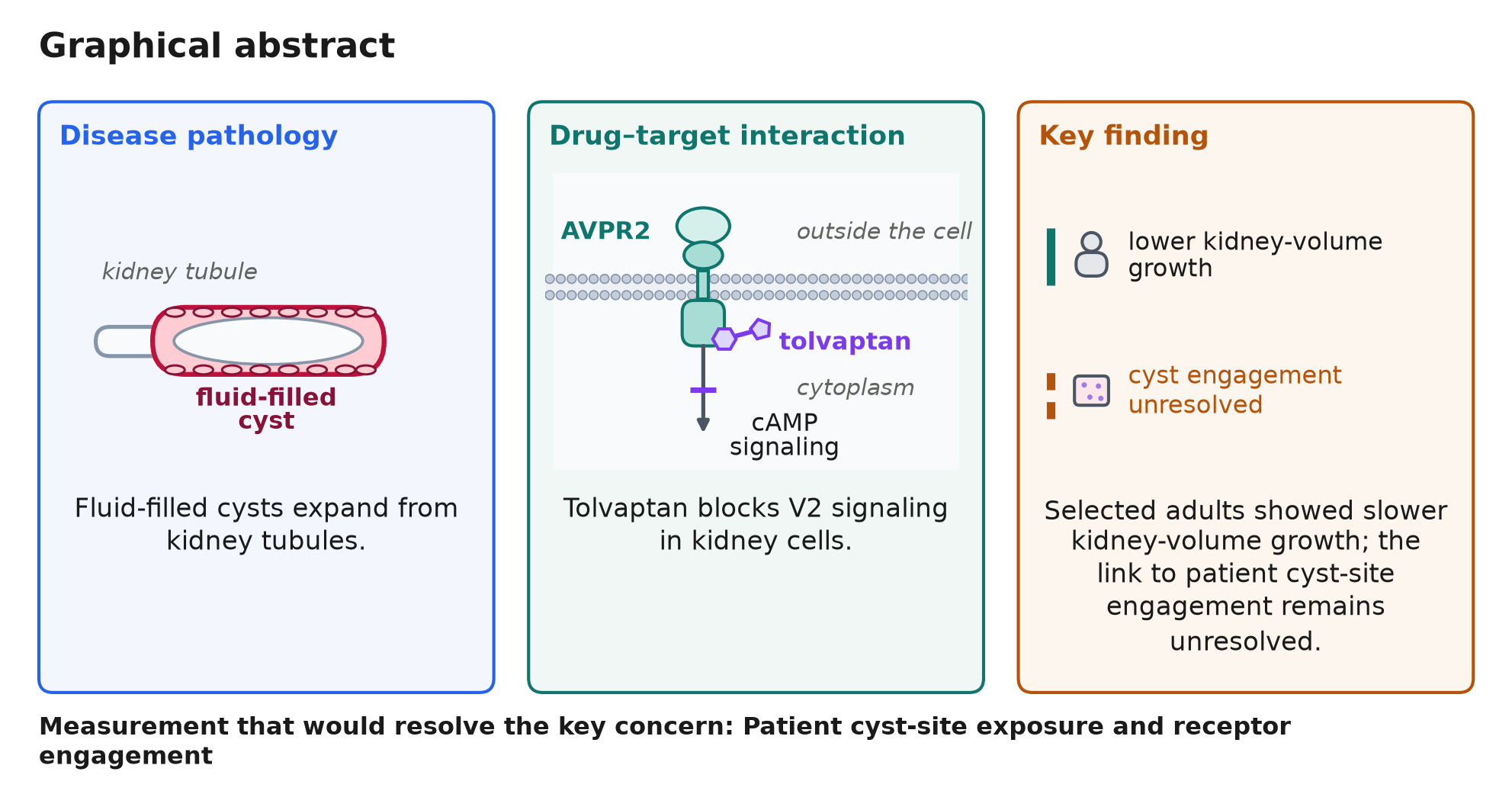
Autosomal dominant polycystic kidney disease (ADPKD) is an inherited disease in which fluid-filled cysts enlarge the kidneys and gradually reduce their ability to filter blood.

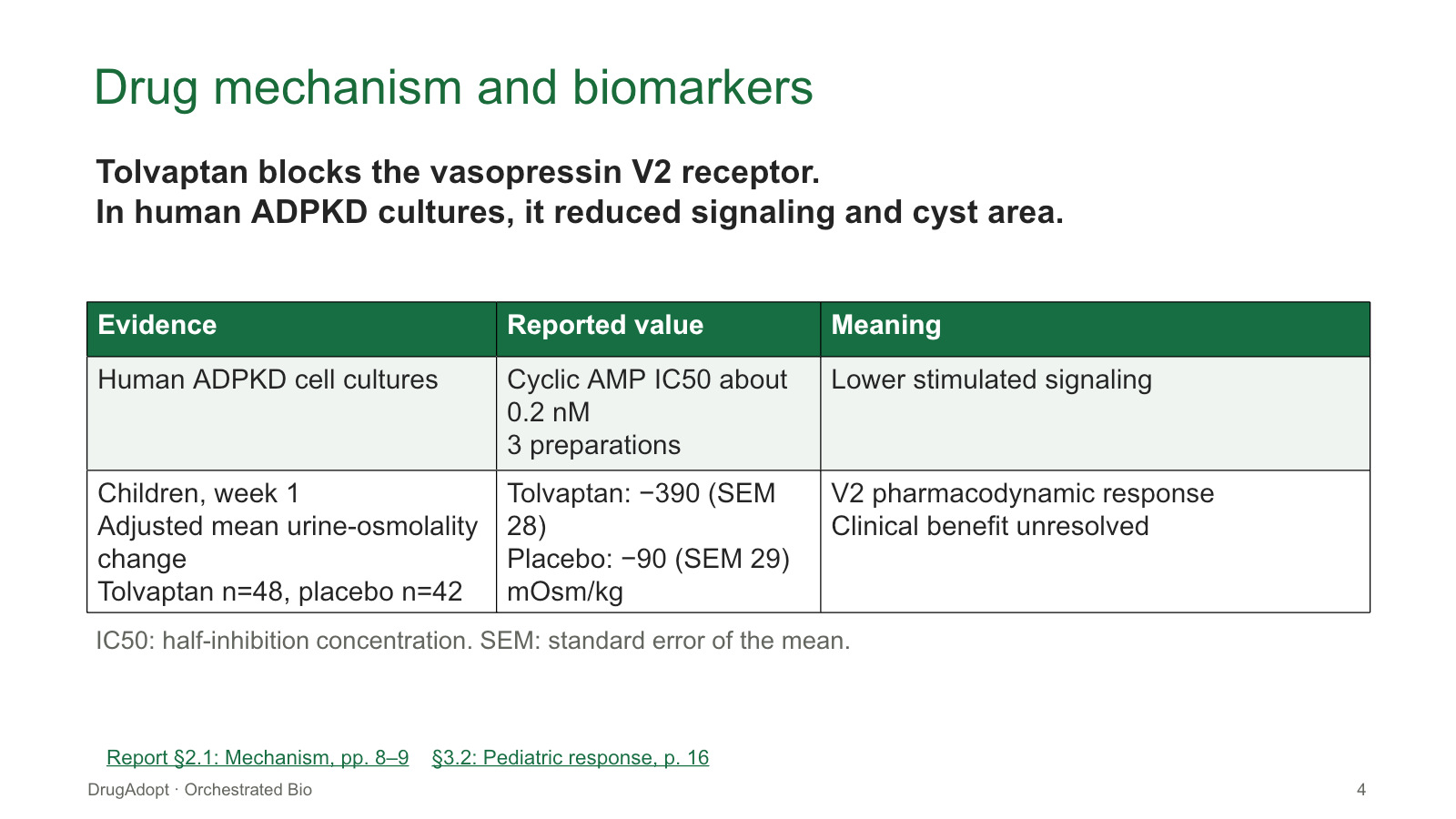
Tolvaptan blocks the kidney vasopressin V2 receptor (AVPR2). Vasopressin increases water reabsorption in kidney tubules, so blocking its V2 receptor increases water excretion.

Report figure

Disease biology

Read section →

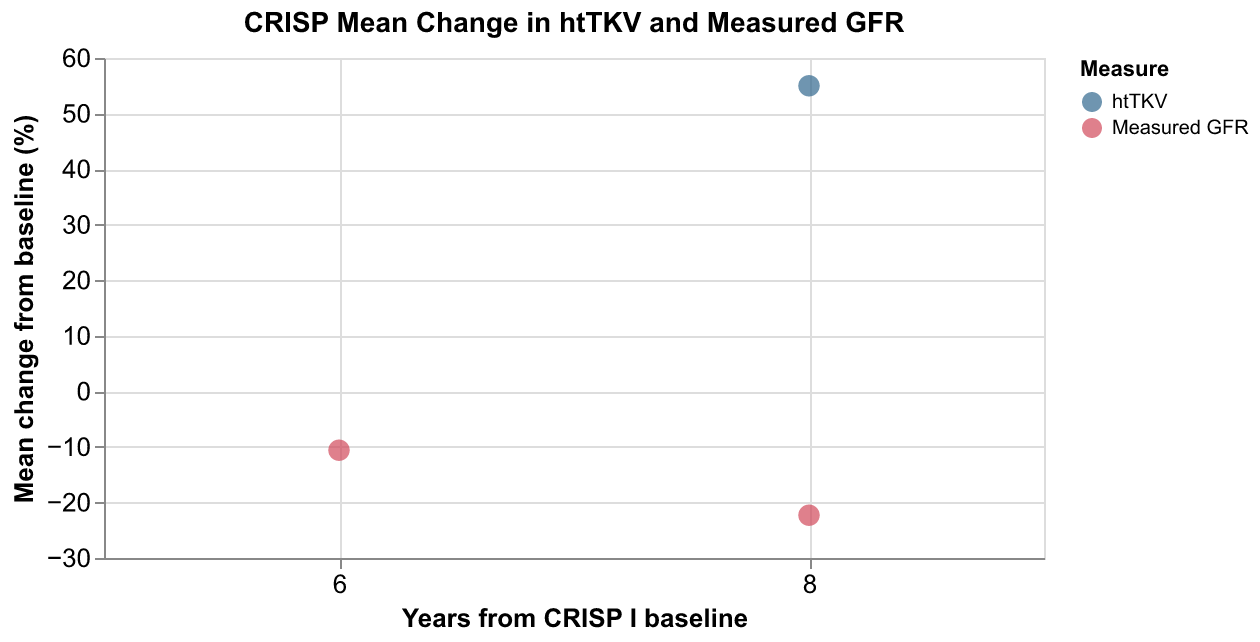
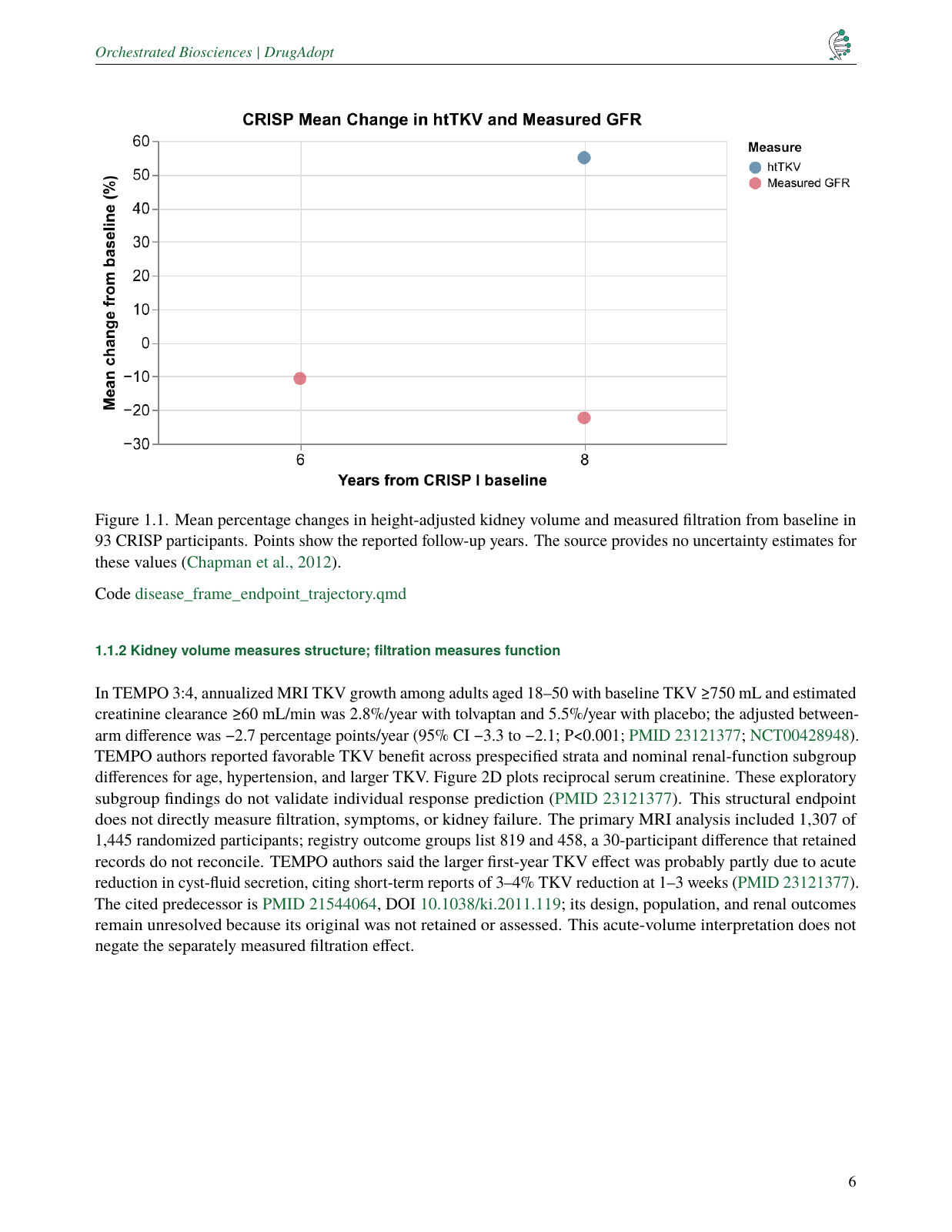
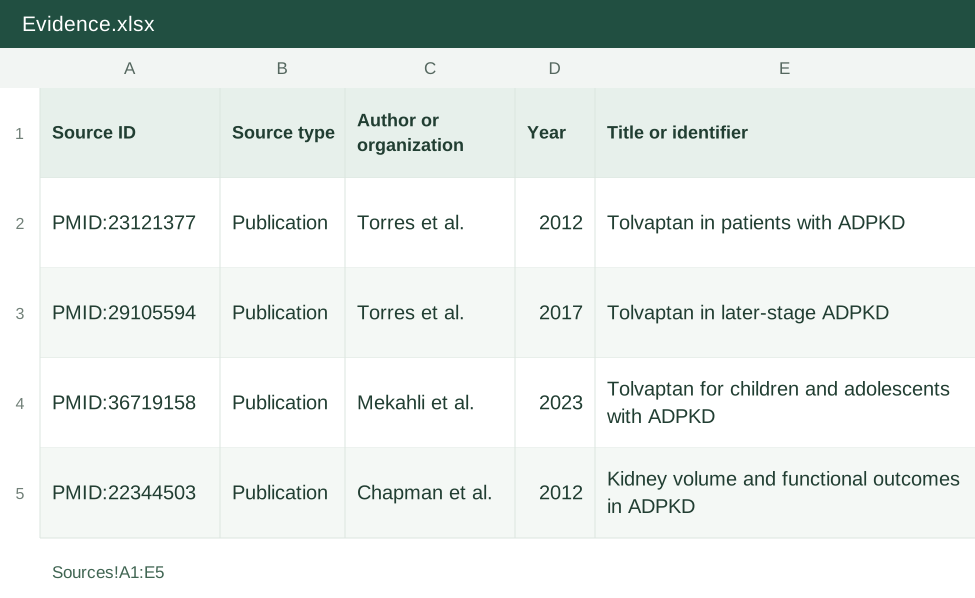
Disease background. Autosomal dominant polycystic kidney disease (ADPKD) is an inherited disease in which fluid-filled cysts enlarge the kidneys and gradually reduce their ability to filter blood. Long-term observations in CRISP, an ADPKD imaging study, showed kidney enlargement before a measurable fall in filtration (Chapman et al., 2012).

Figure 1.1. Mean percentage changes in height-adjusted kidney volume
and measured filtration from baseline in 93 CRISP participants. Points
show the reported follow-up years. The source provides no uncertainty
estimates for these values ( Chapman et al.,
2012 ).

Figure 1.1. Mean percentage changes in height-adjusted kidney volume and measured filtration from baseline in 93 CRISP participants. Points show the reported follow-up years. The source provides no uncertainty estimates for these values (Chapman et al., 2012).

Code disease_frame_endpoint_trajectory.qmd

Therapy. Tolvaptan blocks the kidney vasopressin V2 receptor (AVPR2). Vasopressin increases water reabsorption in kidney tubules, so blocking its V2 receptor increases water excretion. It is used to slow kidney-function decline in adults at risk of rapidly progressing ADPKD (FDA, 2026).

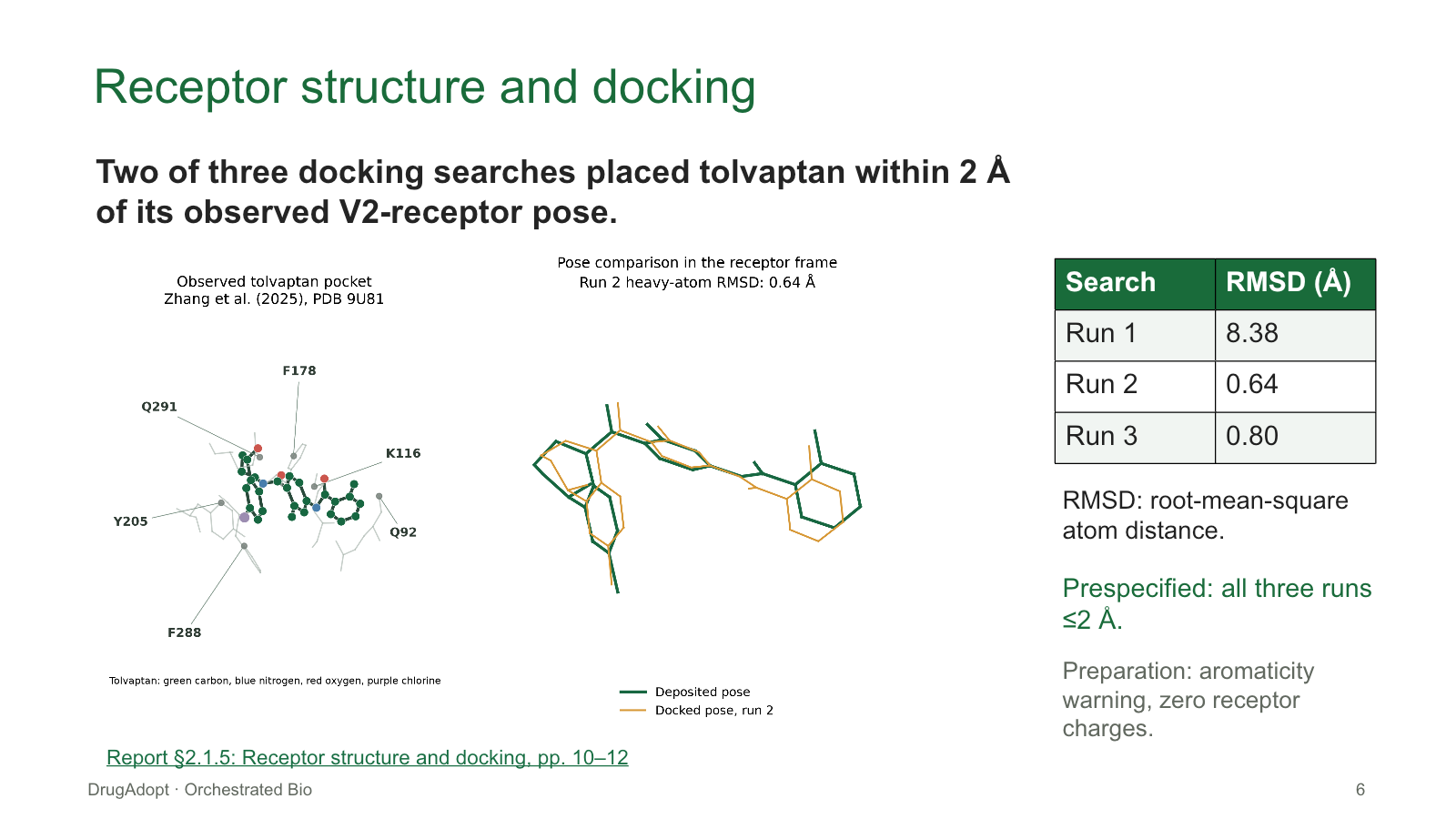
Figure 2.3. Observed tolvaptan pocket in PDB 9U81 and deposited pose
overlaid with run 2; nearby markers include a subset of the 16 residues
within the geometric 4 Å rule, ligand carbon, nitrogen, oxygen and
chlorine are green, blue, red and purple, and deposited and docked poses
are green and orange (unaligned RMSD 0.64 Å; no uncertainty; Zhang et
al., 2025; PMID
41188237 ).

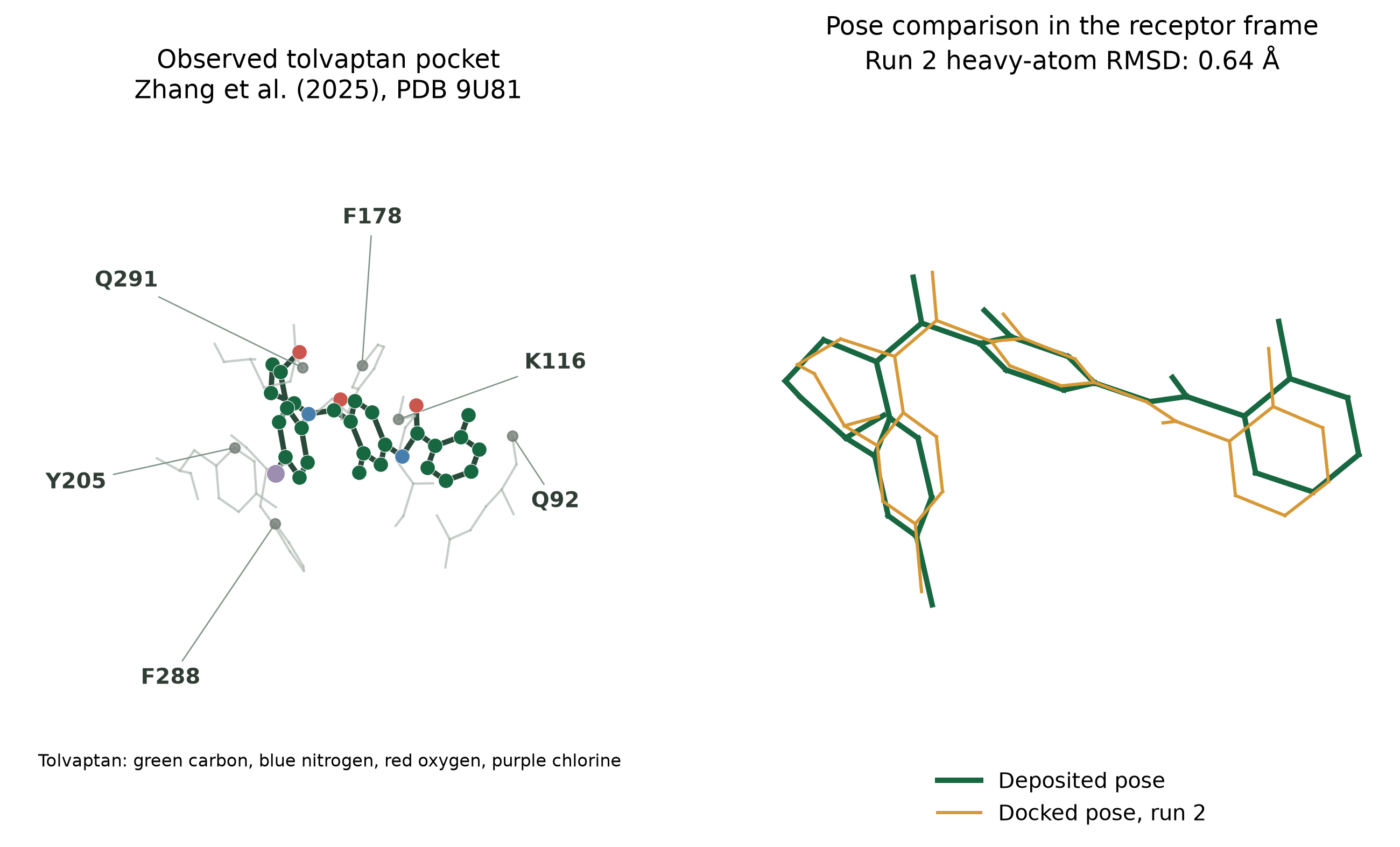
Figure 2.3. Observed tolvaptan pocket in PDB 9U81 and deposited pose overlaid with run 2; nearby markers include a subset of the 16 residues within the geometric 4 Å rule, ligand carbon, nitrogen, oxygen and chlorine are green, blue, red and purple, and deposited and docked poses are green and orange (unaligned RMSD 0.64 Å; no uncertainty; Zhang et al., 2025; PMID 41188237).

Clinical results

Read section →

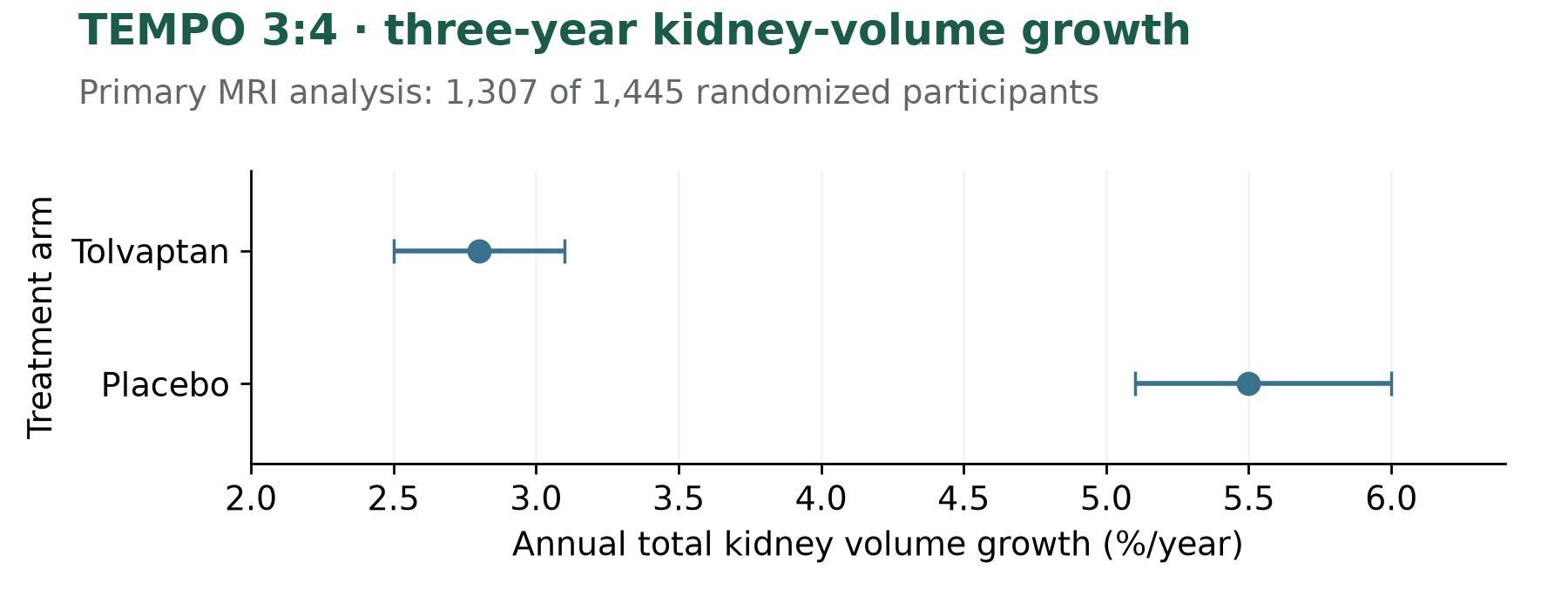
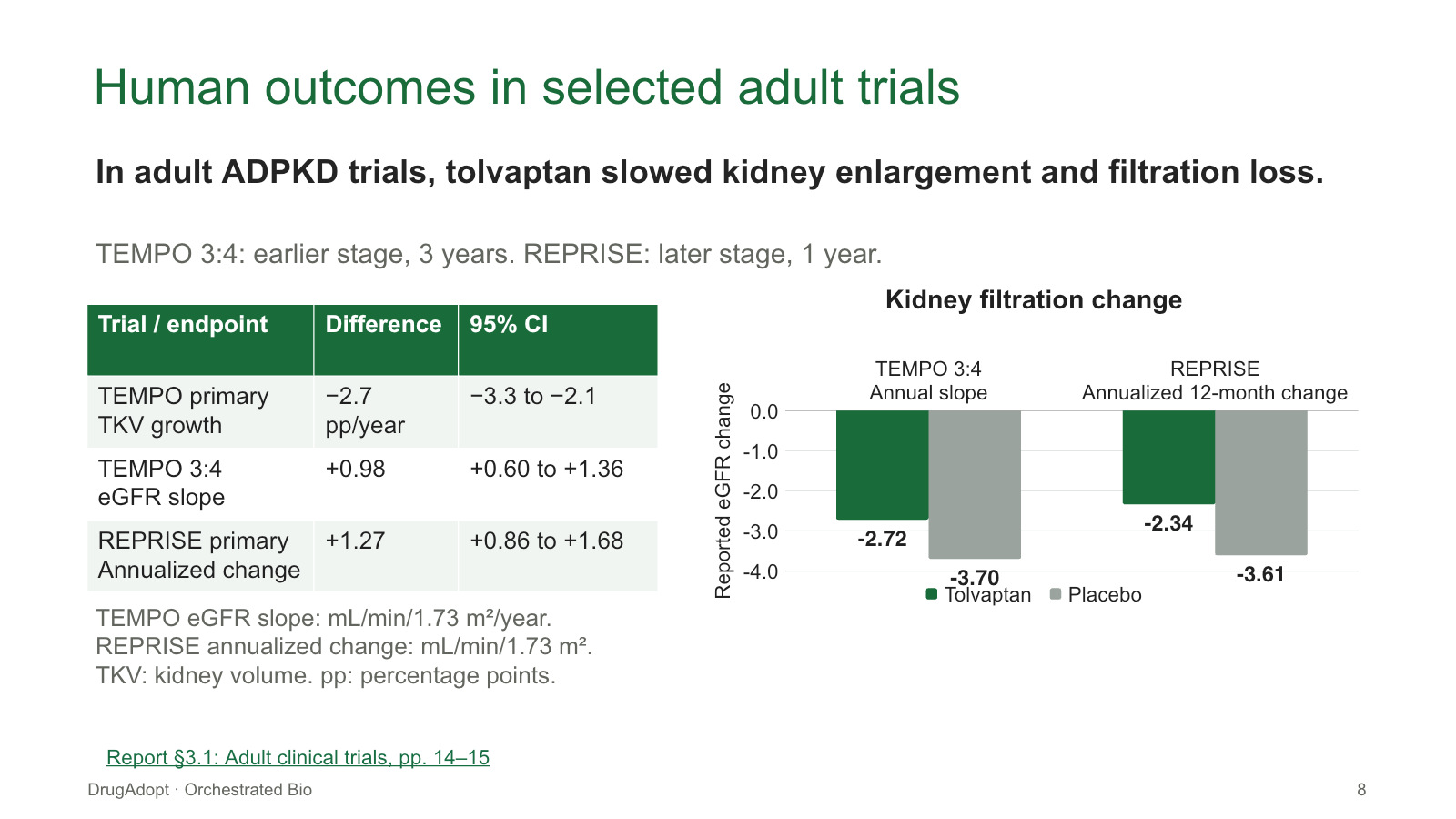
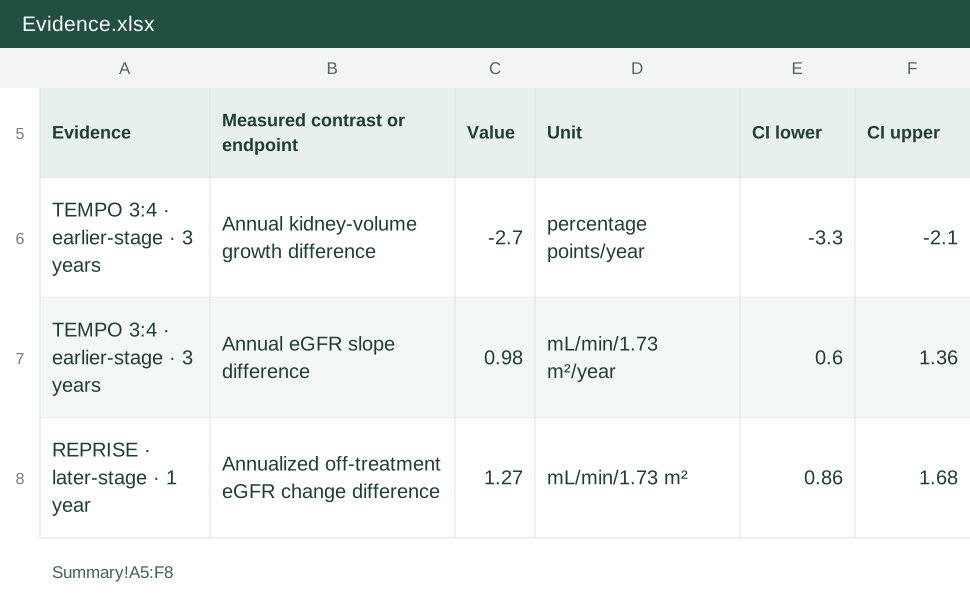
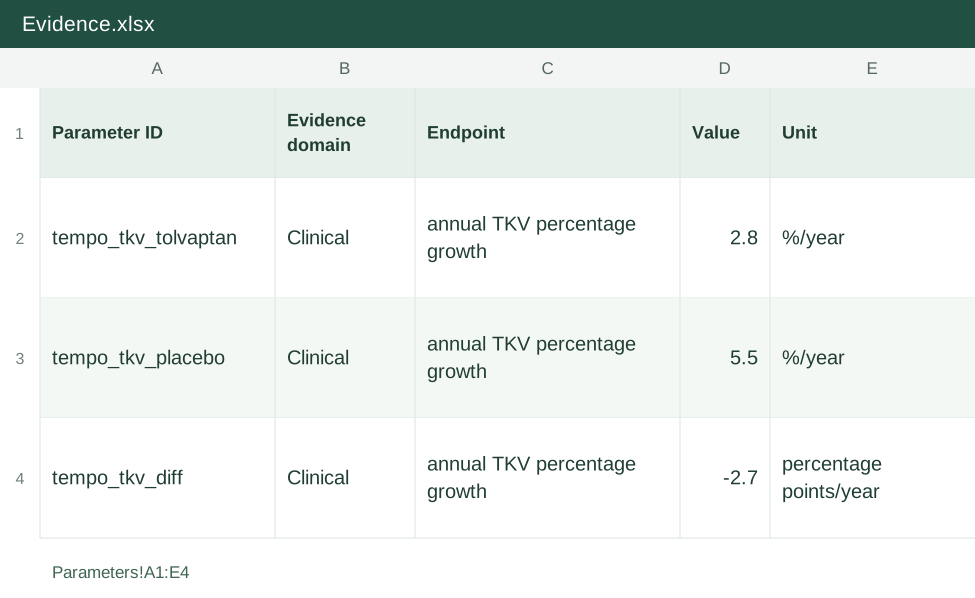
Adult benefit. The TEMPO 3:4 trial compared tolvaptan with placebo in earlier-stage ADPKD over three years. Annual kidney-volume growth was 2.8% with tolvaptan versus 5.5% with placebo among 1,307 participants in the primary MRI analysis. TEMPO authors proposed that an acute reduction in cyst-fluid secretion partly explained the larger first-year volume effect. Estimated glomerular filtration rate (eGFR) is a blood-based estimate of kidney filtration. In TEMPO, eGFR declined more slowly with tolvaptan: the annual slope difference versus placebo was +0.98 mL/min/1.73 m2/year (95% CI +0.60 to +1.36).

The REPRISE trial tested tolvaptan in later-stage ADPKD over one year. Participants were randomized after five weeks of tolvaptan titration and tolerability testing. In the annualized comparison, eGFR fell less with tolvaptan than with placebo, a difference of +1.27 mL/min/1.73 m2 (95% CI +0.86 to +1.68). This comparison measured change from pretreatment to off-treatment follow-up.

Trial and comparison eGFR outcome and window Between-arm difference Analysis/population bound
TEMPO 3:4 tolvaptan vs placebo Annual slopes from end of dose escalation to month 36: −2.72 vs −3.70 mL/min/1.73 m2/year +0.98 (95% CI +0.60 to +1.36) 1,445 randomized; label reports 5% tolvaptan and 2% placebo exclusions from slope analysis; exact contributor n not established
REPRISE tolvaptan vs placebo Annualized 12-month change: −2.34 vs −3.61 mL/min/1.73 m2 +1.27 (95% CI +0.86 to +1.68) Publication: 1,370 randomized; registry efficacy groups 668/663; randomization followed tolerability run-in

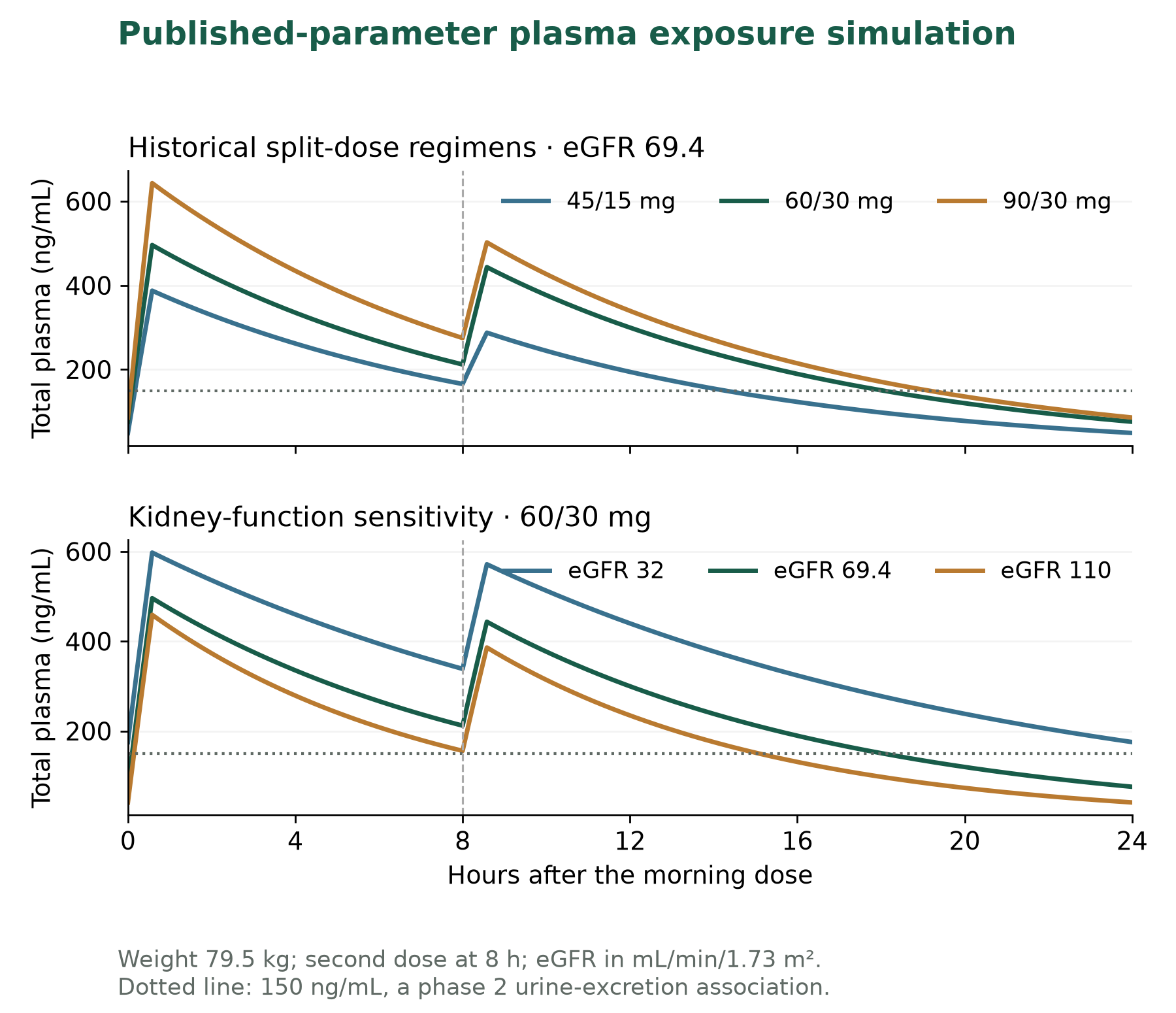
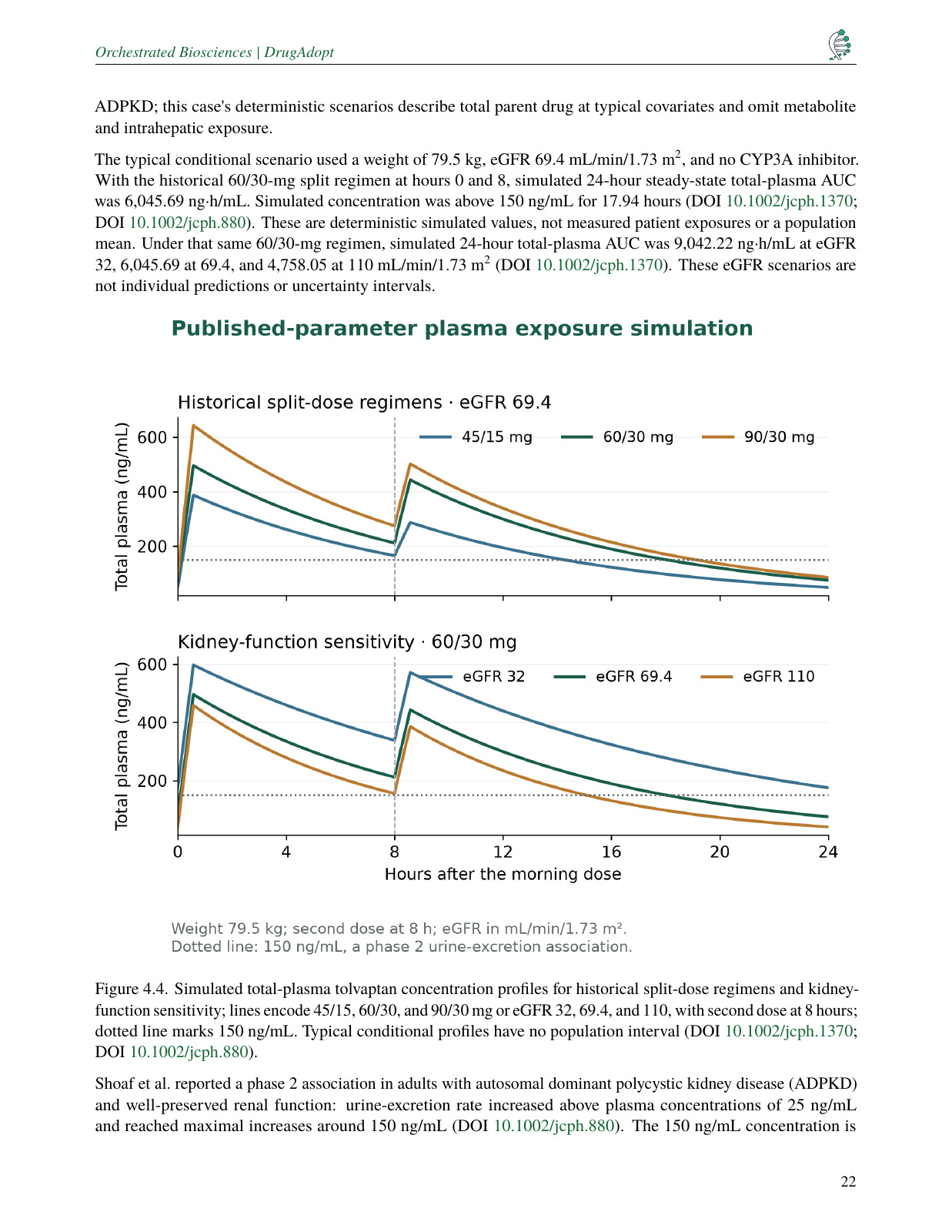
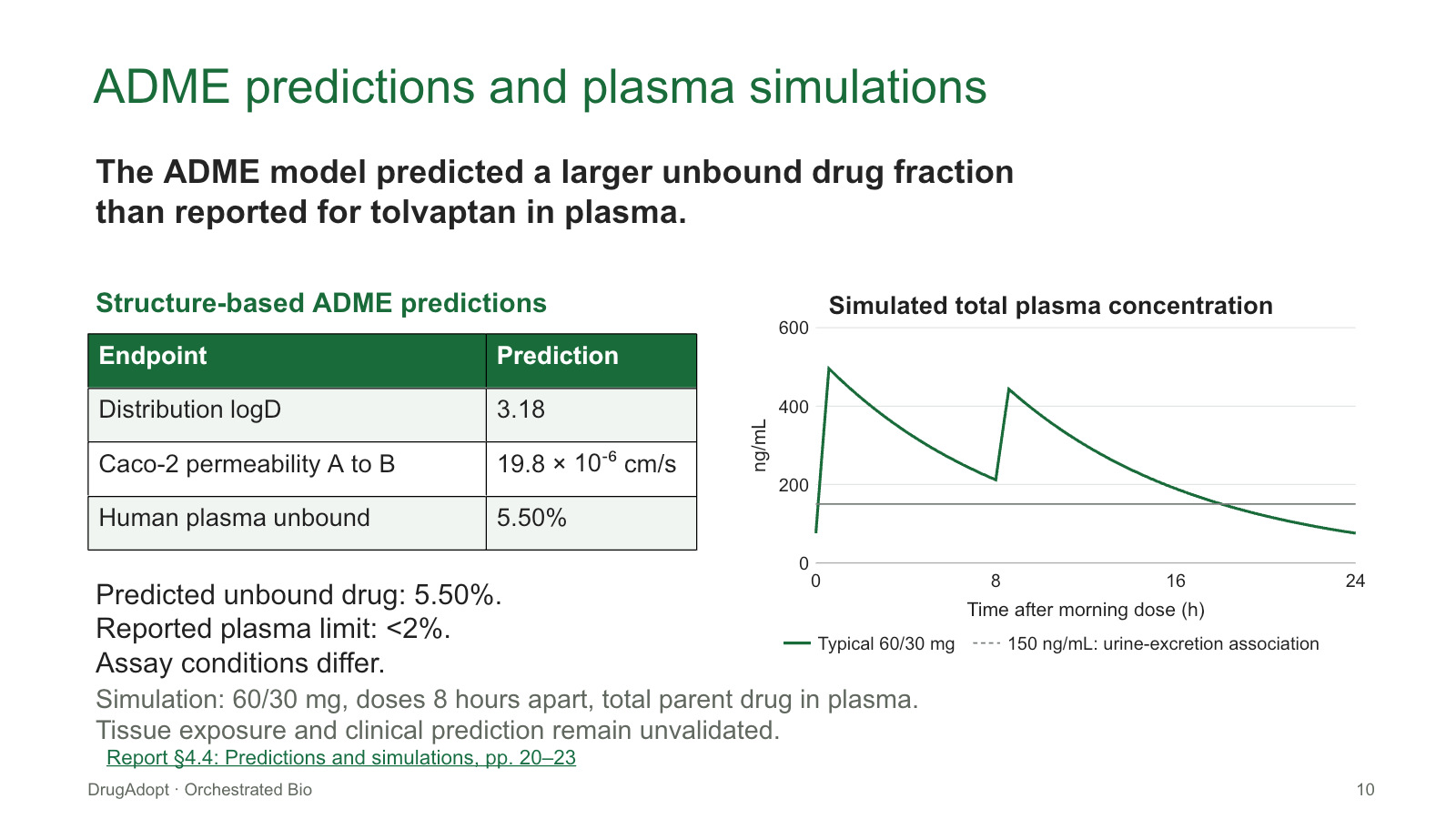
We used a published population pharmacokinetic model to simulate tolvaptan plasma exposure across historical dose schedules and kidney-function scenarios.

Figure 4.4. Simulated total-plasma tolvaptan concentration profiles
for historical split-dose regimens and kidney-function sensitivity;
lines encode 45/15, 60/30, and 90/30 mg or eGFR 32, 69.4, and 110, with
second dose at 8 hours; dotted line marks 150 ng/mL. Typical conditional
profiles have no population interval (DOI 10.1002/jcph.1370 ; DOI 10.1002/jcph.880 ).

Figure 4.4. Simulated total-plasma tolvaptan concentration profiles for historical split-dose regimens and kidney-function sensitivity; lines encode 45/15, 60/30, and 90/30 mg or eGFR 32, 69.4, and 110, with second dose at 8 hours; dotted line marks 150 ng/mL. Typical conditional profiles have no population interval (DOI 10.1002/jcph.1370; DOI 10.1002/jcph.880).

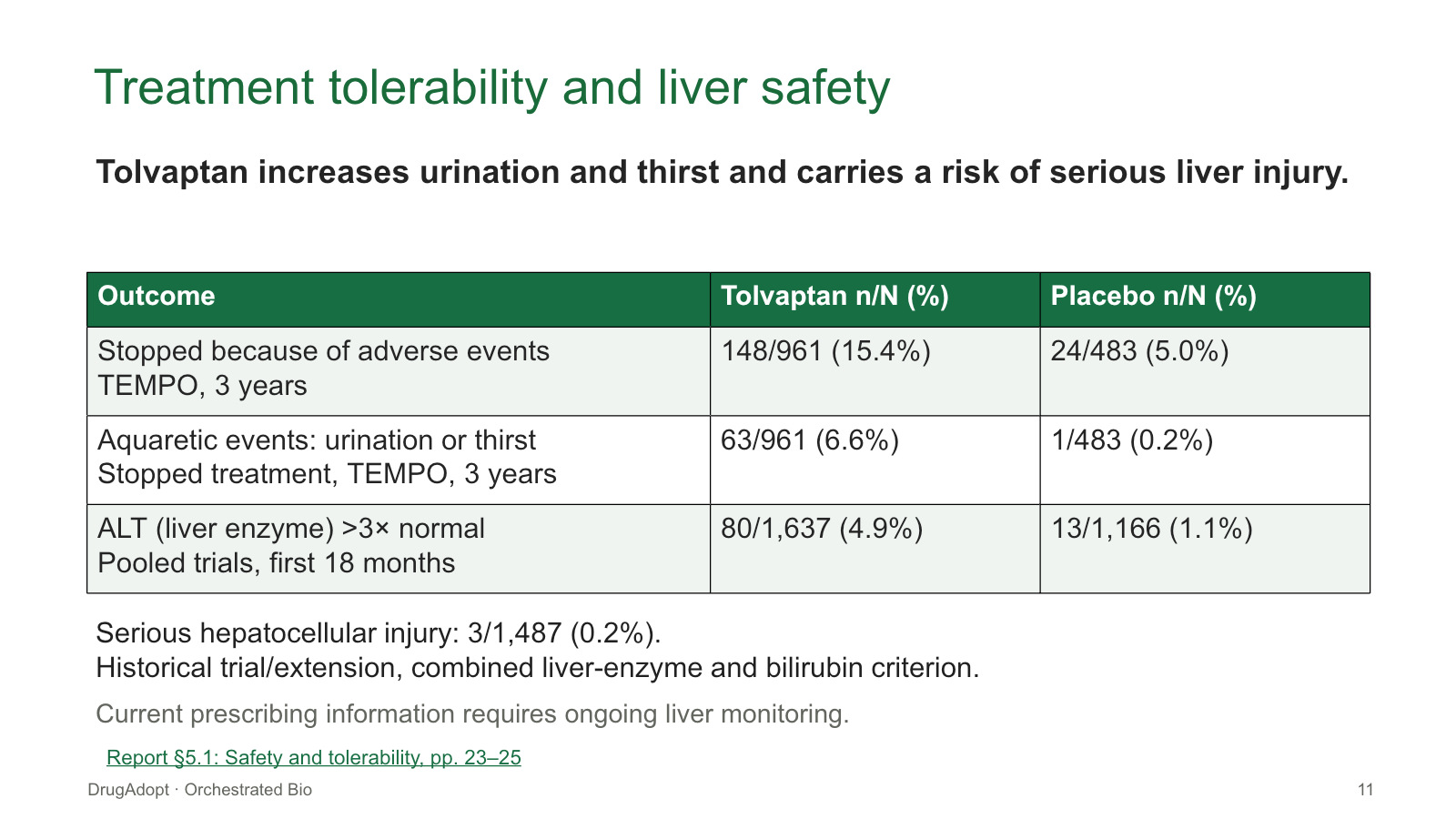
Safety. In TEMPO, adverse events led to discontinuation in 148/961 tolvaptan participants versus 24/483 placebo participants. Aquaretic events accounted for 63/961 versus 1/483 discontinuations. Aquaretic effects include increased urination and thirst. Alanine aminotransferase (ALT) is a liver enzyme used to detect liver-cell injury. Across two trials, ALT rose above three times the upper limit of normal in 80/1,637 tolvaptan versus 13/1,166 placebo participants. Serious liver injury meeting a combined transaminase-and-bilirubin criterion occurred in 3/1,487 tolvaptan recipients and none on placebo. The combined criterion required transaminases at least three times the upper limit of normal and bilirubin at least twice the upper limit (FDA, 2026).

Observation Tolvaptan Comparator Scope
Increased urination composite 668/961 (69.5%) 135/483 (28.0%) TEMPO label composite
Thirst composite 612/961 (63.7%) 113/483 (23.4%) TEMPO label composite
Alanine aminotransferase (ALT) >3× upper limit of normal (ULN; upper reference limit) 80/1,637 13/1,166 Pooled two double-blind trials; first 18 months after initiation
ALT >3× ULN 38/681 8/685 REPRISE study-specific safety population
Serious hepatocellular injury 3/1,487 0 reported Long-term trial/extension context; no matched placebo denominator stated
Any adverse-event discontinuation 148/961 (15.4%) 24/483 (5.0%) TEMPO randomized period
Aquaretic-event discontinuation 63/961 (6.6%) 1/483 (0.2%) TEMPO; pollakiuria, polyuria or nocturia
Registry event term: anemia (source spelling “Anaemia”) 30/961 26/483 NCT00428948 individual event term; not causal evidence

IP landscape

Read section →

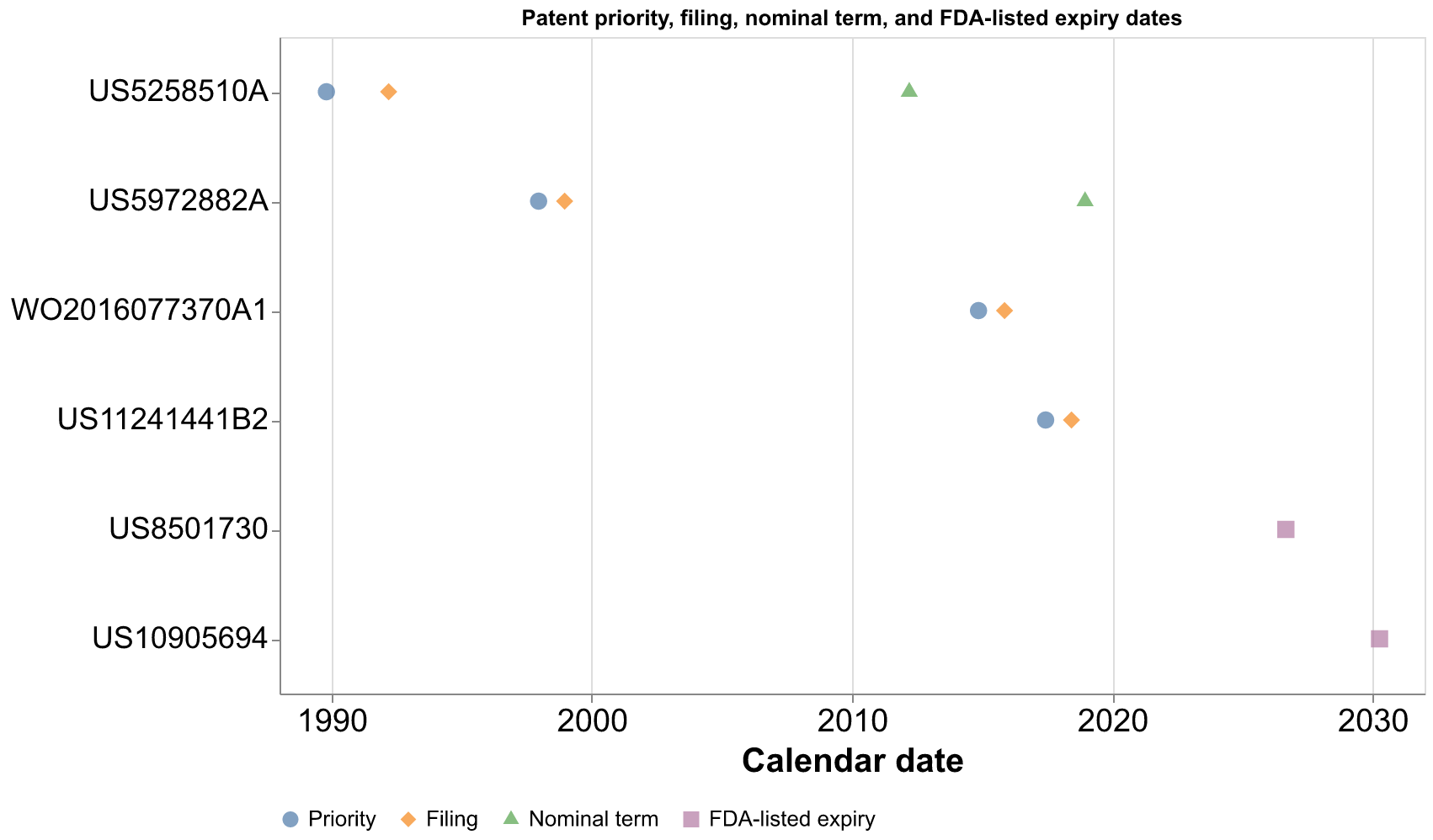
Six selected ADPKD programs are identified; broader status is unknown for venglustat and rapamycin/sirolimus.

Figure 6.2. Priority and filing dates, independently calculated
nominal filing-plus-20 term dates, and FDA-listed Patent Expiration
dates for selected US and lixivaptan records; calendar dates with no
uncertainty interval, in a bounded bibliographic sample. Circles mark
priority, diamonds filing, triangles nominal term, and squares
FDA-listed expiration; labels identify records, with FDA-listed
categories drug substance (DS) and drug product (DP). The Orange Book
dates are source-reported entries for product 001, not the independent
nominal calculation, and neither establishes claim scope or a term
conclusion ( US5258510A , US5972882A , US8501730 , US10905694 , WO2016077370A1 , US11241441B2 ).

Figure 6.2. Priority and filing dates, independently calculated nominal filing-plus-20 term dates, and FDA-listed Patent Expiration dates for selected US and lixivaptan records; calendar dates with no uncertainty interval, in a bounded bibliographic sample. Circles mark priority, diamonds filing, triangles nominal term, and squares FDA-listed expiration; labels identify records, with FDA-listed categories drug substance (DS) and drug product (DP). The Orange Book dates are source-reported entries for product 001, not the independent nominal calculation, and neither establishes claim scope or a term conclusion (US5258510A, US5972882A, US8501730, US10905694, WO2016077370A1, US11241441B2).

Code ip_estate_timeline.qmd

What does your team need to understand?

Bring a biological question, research data or therapeutic assets you want to understand. We investigate the evidence and look for new findings that could explain disease or treatment response.

Find candidate biomarkers

Investigate biological signals linked to disease or treatment response and their possible therapeutic relevance. We analyze public or project data and examine the evidence around each finding.

Compare the assets you’re considering

Understand where competing programs differ in biology, experimental findings, available clinical results and safety evidence. We examine those differences and the uncertainties around each asset, whether you’re evaluating a purchase or your own pipeline.

Connect the science before a trial

Explore how the mechanism, disease biology and exposure evidence relate to the effects reported for your drug. Investigate scientific gaps and safety signals before an IND or first trial.

Understand who may respond

Study differences between patient groups and the biomarkers that could explain them. This can inform the scientific basis for patient selection during trial planning, including the Phase I-to-II transition.

An example: tolvaptan in ADPKD

What changed downstream of tolvaptan’s target?

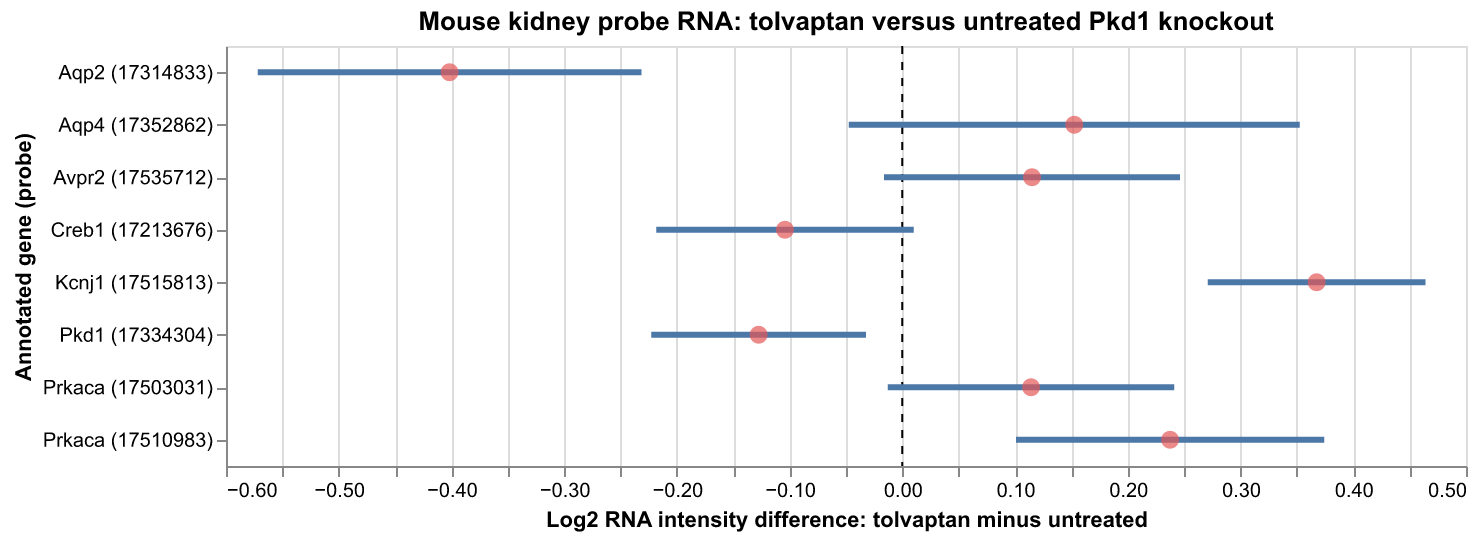
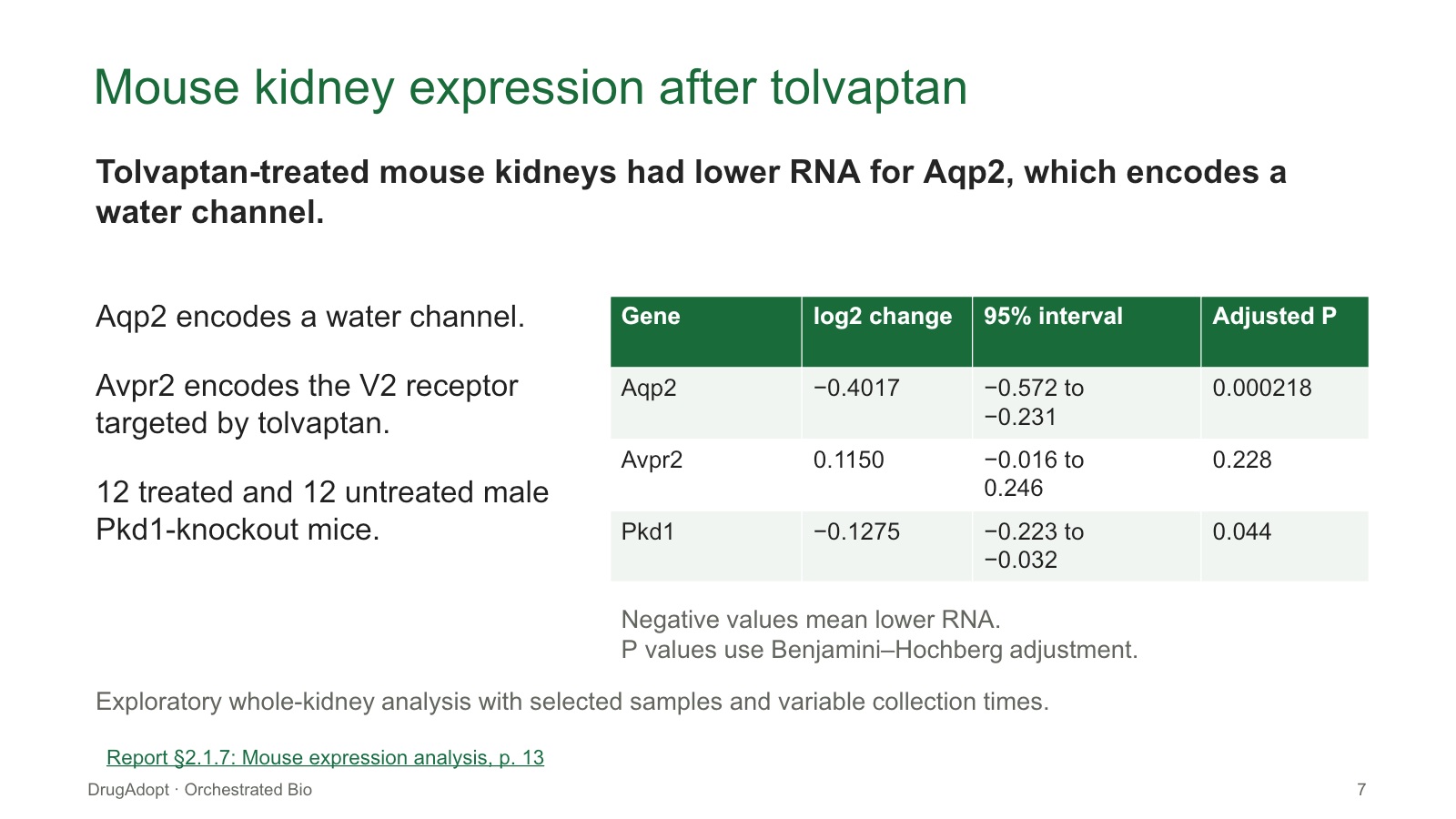
Tolvaptan blocks the V2 receptor in the kidney’s water-handling pathway. We reanalyzed public kidney-expression data from 12 treated and 12 untreated male Pkd1-knockout mice selected for expression profiling.

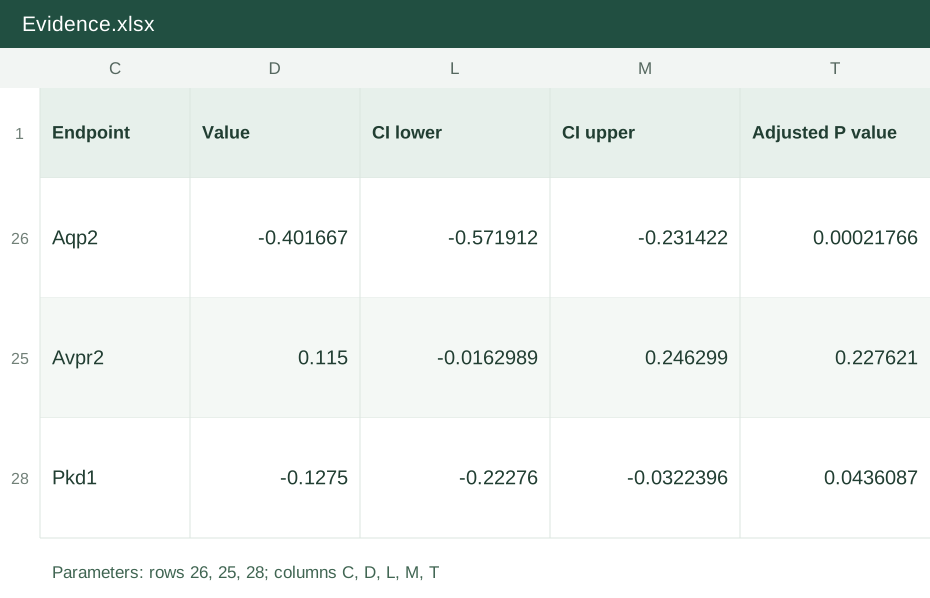
Aqp2 RNA was lower in treated mouse kidneys. Aqp2 encodes a water channel downstream of V2 signaling. This exploratory result adds a molecular signal to investigate alongside cyst-fluid secretion and the clinical kidney-volume findings.

Eight exploratory marker probes in mouse kidneys. Dots show tolvaptan-minus-untreated RNA differences, and bars show 95 percent confidence intervals.
Exploratory mouse analysis. Dots show RNA differences; bars show 95% confidence intervals. Report §2.1.7
01

Report

Mouse expression analysis

Aqp2 encodes aquaporin-2, a water channel, while Avpr2 encodes the receptor itself.

The Aqp2 probe showed a −0.4017 log2 difference between treated and untreated kidneys.

Exploratory comparison of selected whole-kidney samples.

03

Spreadsheet

Aqp2 · probe 17314833

MeasureValue
RNA difference−0.4017
log2 units
95% confidence interval−0.5719 to −0.2314
Adjusted P value0.000218

Tolvaptan minus untreated. P values use Benjamini–Hochberg adjustment.

Image detail

Start with your question or the assets you’re considering.

We discuss the available data and agree the scope, fee and delivery date. You receive a scientific report, slide deck, evidence workbook, and the supporting data and code.

We are taking on a small number of pilot projects. Data you share for a pilot stays on our private cloud and is never sent to third-party model APIs. How your data is handled.

Discuss your project Email us